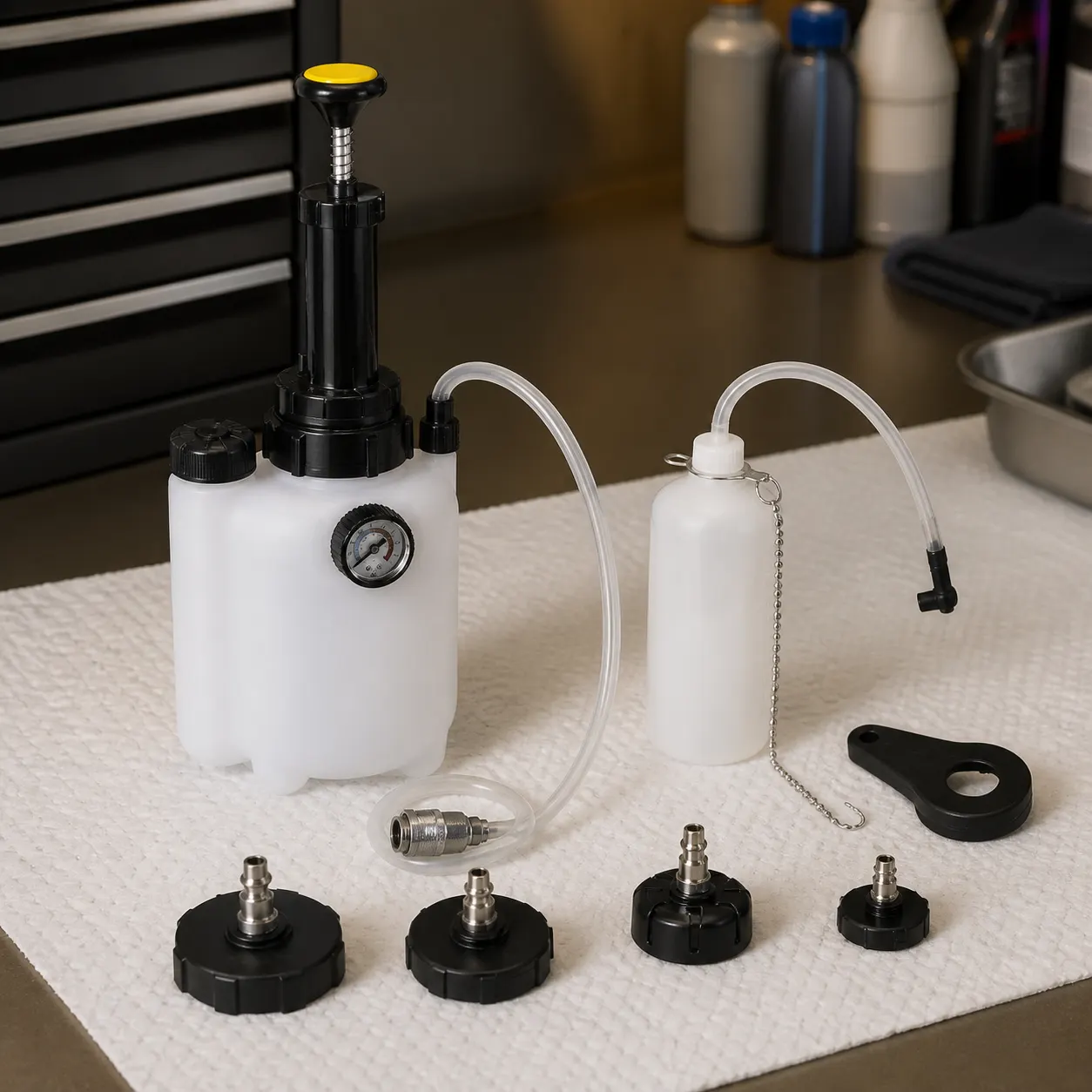
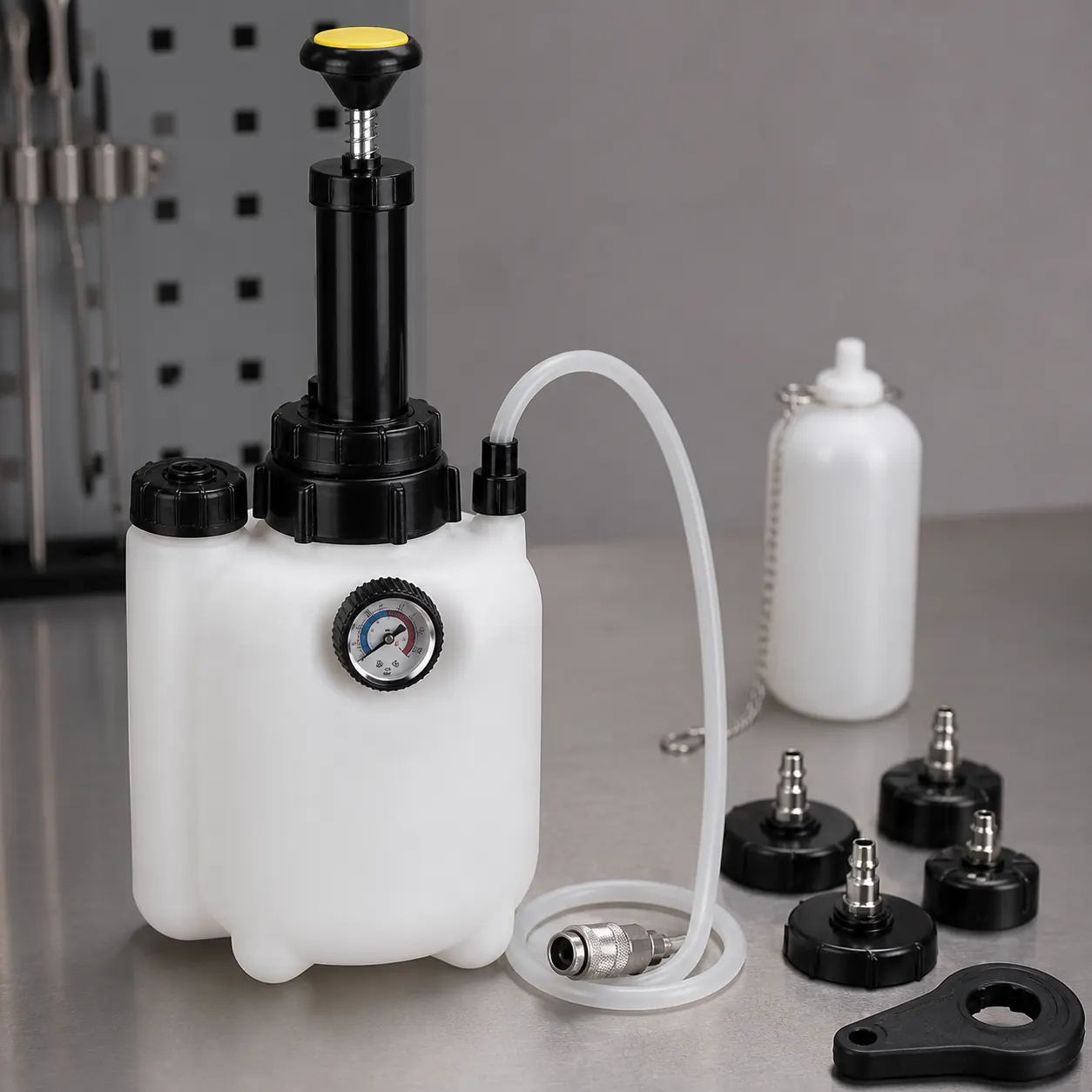
Short answer: A brake fluid reservoir bottle is a refill accessory for keeping suitable fresh fluid available at the reservoir during a separately defined bleeding procedure. The Carbleeder listing confirms a 3L bottle, four adapters and the VKS6003-4 SKU. It does not confirm universal reservoir fit, pressure operation, the correct fluid for a vehicle, ABS compatibility or a complete one-person method. Treat the bottle as one controlled part of hydraulic maintenance. Verify the vehicle instructions and adapter before filling it, keep brake fluid clean and contained, and do not continue if the system or final brake condition is uncertain.
Place the bottle in the correct part of the workflow
The refill bottle belongs at the reservoir side of the planned work. A catch container belongs at the discharge side, while pressure or vacuum equipment performs different functions. Keeping those roles separate prevents a buyer from expecting one bottle to supply pressure, collect waste and prove that air has been removed.
The listing describes brake-fluid, clutch-fluid and oil refill use for automotive repair and maintenance. It does not state that the bottle diagnoses a hydraulic fault, repairs a leak or confirms safe pedal operation. Those outcomes depend on the vehicle procedure, system condition and competent final checks.
| Tool or check | Primary role | Carbleeder evidence |
|---|---|---|
| Reservoir refill bottle | Hold suitable fresh fluid at the reservoir | Listed 3L bottle with four adapters |
| Discharge container | Collect old or expelled fluid | Manufacturer does not specify |
| Pressure or vacuum equipment | Move fluid by a defined method | Manufacturer does not specify |
| Brake inspection | Confirm system condition and roadworthiness | Outside the product's stated role |
Protect the fluid from wrong selection and contamination
A bottle capacity does not identify the correct brake fluid. Vehicle manufacturers publish model-specific requirements. Tesla's official service guidance, for example, tells owners not to top up brake fluid themselves and refers to the appropriate brake fluid within the documented procedure. That example does not define another vehicle's fluid; it shows why the instructions for the vehicle being serviced must control the choice.
Do not mix product identity with fluid compatibility. The Carbleeder page names refill uses but the manufacturer does not specify compatible DOT grades, seal materials or cleaning methods. Keep dirt, water, petroleum products and previously used fluid away from fresh brake fluid, following the vehicle information and the fluid supplier's safety data sheet.
- Read the exact vehicle fluid and bleeding requirements.
- Inspect the reservoir and obtain documented adapter fit before filling.
- Keep fresh fluid sealed, labelled and separate from drained material.
- Plan compliant waste handling and clean-up before opening the system.
Choose controls for fluid and vehicle hazards
HSE includes brake fluids among hazardous substances found in motor vehicle repair. The safety data sheet and risk assessment should determine controls for skin or eye contact, storage, spills and disposal. HSE PPE guidance says protection must match hazards such as chemical splash and fit the wearer properly.
If the task requires access under a raised car, the fluid tool is irrelevant to the lifting risk. Follow HSE raised-vehicle guidance, use suitable stands or other rated support on a sound surface and prevent vehicle movement. Do not improvise support because the hydraulic task appears brief.
- Use labelled fresh fluid that meets the vehicle specification.
- Select gloves, eye protection and clothing from the risk assessment and safety data sheet.
- Keep absorbent and waste arrangements ready without reusing contaminated fluid.
- Do not work beneath a vehicle supported only by a jack.
Product limits and stop points
The manufacturer does not specify adapter dimensions, cap threads, vehicle compatibility, pressure range, leak resistance, flow control, fluid-grade compatibility, cleaning instructions, certification or support for electronic bleeding routines. A dry visual fit is not proof of a sealed or suitable connection.
Stop the buying or working process when the adapter cannot be documented, the vehicle procedure is unavailable, the required fluid is uncertain or the brake system has an unresolved warning, leak or abnormal pedal. A competent repairer should assess those conditions before the vehicle returns to use.
Related guides and product details
Use a reservoir bottle only where its refill role, adapter and fluid are all verified. The 3L Carbleeder product may fit that narrow need, but it cannot replace vehicle instructions, hazard controls or a competent brake-system assessment. Read One-Man Brake Bleeding Bottle: What to Check First for related guidance. Read Brake Fluid Refill Bottle UK: Checks Before Buying for related guidance. Review the documented specification on the 3L Brake Fluid Refill Bottle with 4 Adapters product page before ordering.
Sources and safety context
- Supports the product identity, capacity, adapter count, SKU and stated refill application. Current Carbleeder product page.
- Supports treating brake fluid as a hazardous substance in vehicle repair. HSE: COSHH and motor vehicle repair.
- Supports task-specific protection for chemical splash and whole-body exposure. HSE: Using the right type of PPE.
- Manufacturer example showing that vehicle-specific instructions control brake-fluid selection and whether topping up is appropriate. Tesla: Checking Brake Fluid.
- Supports safe support and access controls for raised vehicles. HSE: Working safely under motor vehicles.